Hard boiled eggs are a protein-packed staple for meal prep, quick breakfasts, and snack-friendly nutrition. But here’s the catch: most home cooks aren’t quite sure how long their hard boiled eggs actually stay safe in the refrigerator. The answer isn’t just a vague “a few days”, there are specific timeframes, storage methods, and telltale signs that separate fresh eggs from ones that need to go straight in the compost. Whether you’re batch-cooking for the week ahead or wondering about eggs sitting in your fridge right now, understanding proper storage makes the difference between a convenient protein source and a food safety risk.
Table of Contents
ToggleKey Takeaways
- Hard boiled eggs last up to 7 days in the refrigerator when stored in their shells, but only 3–4 days once peeled, with the countdown starting immediately after boiling and cooling.
- Cool hard boiled eggs in ice water for at least 5 minutes immediately after boiling, then store them in sealed containers on refrigerator shelves (not the door) at 40°F or below to maximize freshness.
- Trust your nose and eyes to detect spoilage—discard eggs with sulfur-like odors, visible slime, mold, or a grayish-green yolk ring, and never taste-test questionable eggs due to Salmonella and Listeria risks.
- Store in-shell eggs in sealed containers without washing, and store peeled eggs submerged in fresh water that you change daily to prevent odor buildup and extend shelf life.
- Label containers with the boiling date to prevent guessing about age, and consider boiling smaller batches every few days instead of one large batch to reduce spoilage and waste.
Storage Duration and Safe Timeframes
Hard boiled eggs last up to 7 days in the refrigerator when stored correctly, though the earlier you eat them, the better the flavor and texture. The countdown clock starts the moment you finish boiling and cooling them, not from when you purchased the raw eggs.
In-shell hard boiled eggs keep longer than peeled ones. According to established food safety guidelines, whole, uncracked hard boiled eggs remain safe for the full week. Once you peel or crack the shell, that timeline shortens to 3 to 4 days maximum. The protective shell blocks bacteria from penetrating the white and yolk, but a cracked or peeled egg loses that barrier.
Temperature matters critically here. Your refrigerator needs to be at 40°F (4°C) or below. Every degree warmer speeds up bacterial growth, so a fridge that’s drifting toward 45°F cuts shelf life short. If you’ve left hard boiled eggs on the counter for more than 2 hours (or 1 hour if the room is above 90°F), discard them, don’t try to refrigerate them after that window closes.
Think of it like this: you’re racing against natural decay. The moment proteins start to break down, they attract pathogens. Cooler temperatures slow that process dramatically, but they don’t stop it entirely.
Proper Refrigeration Methods
Storage starts before the eggs even hit the fridge. Cool them properly first. After boiling, plunge the hot eggs into ice water immediately and let them sit for at least 5 minutes. This stops the cooking process and cools them to a safe temperature fast. Skip this step, and residual heat can compromise both texture and safety.
Once cooled, you have two routes: store them in-shell or peel them first.
For in-shell storage:
- Place eggs in a sealed container or covered bowl (not loose on a shelf)
- Keep them on an actual refrigerator shelf, not in the door, door temperatures fluctuate too much
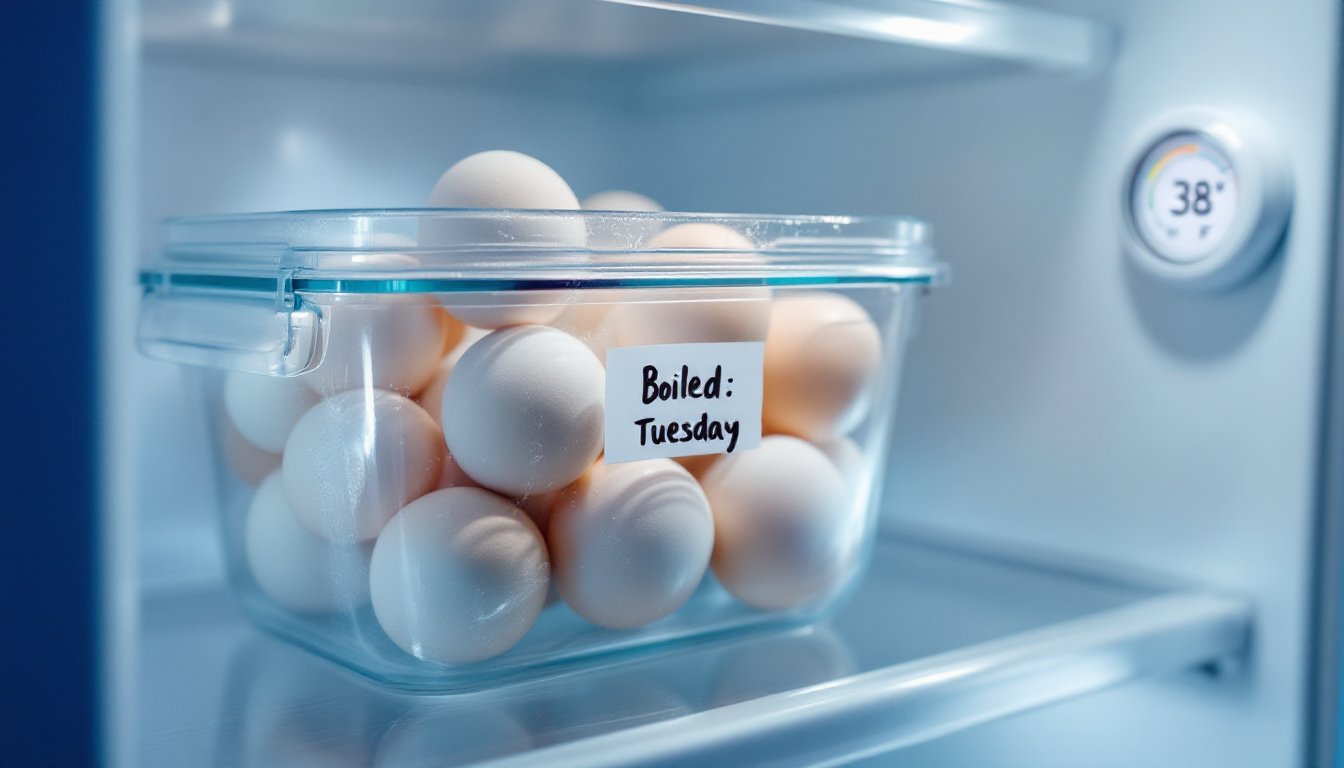
- Label the container with the date you boiled them using a marker or tape
- Don’t wash them before refrigerating: moisture invites mold growth
For peeled eggs:
- Submerge peeled eggs in fresh, cool water in a sealed container
- Change the water daily to prevent odor and extend freshness
- Or store them in an airtight container with no liquid, though they dry out slightly faster
- Keep them toward the back of the fridge, where temperatures are most consistent
Moisture and airflow are your enemies with peeled eggs. Exposure to air dries them and lets odors build up. If storing multiple batches, use separate containers to prevent cross-contamination and make rotation easier.
The container you choose matters too. Glass or plastic containers with lids work best: they’re airtight and easy to label. Cheap plastic containers with loose-fitting lids leave room for odor transfer and drying.
Signs Your Hard Boiled Eggs Have Gone Bad
Your senses are your first line of defense. A bad hard boiled egg broadcasts problems before you bite into it.
Smell is the strongest indicator. Open your container and take a whiff. A fresh hard boiled egg has a mild, neutral scent. If you detect any sulfur-like, rotten, or distinctly off odor, throw them out. Don’t taste to confirm, trust your nose.
Visual signs include:
- A grayish-green ring around the yolk (this is actually harmless iron-sulfur compounds from overcooking, but it signals age)
- Visible slime or slimy texture on the shell or white
- Any mold growth inside the container
- Discoloration or dark spots on the egg itself
Texture matters too. A peeled egg that feels mushy, unusually soft, or gelatinous has likely spoiled. The white should be firm and rubbery: the yolk should be creamy but not runny or grainy.
If you’re unsure, err on the side of caution. Foodborne illness from old eggs, typically caused by Salmonella or Listeria, isn’t worth the gamble. Toss anything that smells questionable, looks off, or was stored past the 7-day mark.
One final check: if you’ve forgotten how long they’ve been in the fridge, date your containers going forward. A simple “Boiled: Tuesday” helps you avoid guessing.
Maximizing Shelf Life and Freshness
Getting the full 7 days out of your hard boiled eggs requires intentional habits, not luck.
Boil fresher eggs when possible. Older eggs (over 10 days old from the lay date) peel less cleanly and don’t store quite as long as fresher ones. Check your carton for a pack date and use eggs within 3-4 weeks of purchase for best results.
Cool them faster by using ice water baths. The quicker eggs drop to refrigerator temperature, the shorter their time in the “danger zone” (40–140°F). Some folks add salt or vinegar to the ice water, but plain ice water works just fine.
Store them in-shell until you’re ready to eat. Peeled eggs lose freshness faster because they’re exposed to bacteria. Keep most of your batch unpeeled, then peel only what you’ll eat that day or the next. This simple habit buys you 3–4 extra days of storage for the whole batch.
Maintain consistent fridge temperature. A fridge thermometer costs $5 and tells you if your appliance is drifting. Most home fridges sit between 35–40°F, which is the sweet spot. If yours is creeping toward 45°F, your eggs lose a day or two of safe storage.
Minimize air exposure for peeled eggs. If you’re storing peeled eggs, submerge them in water and keep the lid sealed tight. Change water every 1–2 days. Some people add a pinch of salt to the water, which may help slightly, though evidence is mixed.
Think of storage as preventing a race to spoilage. Every measure you take, cooling quickly, sealing containers, maintaining temperature, dating batches, adds a day or two of safety margin.
Beyond Standard Refrigeration Storage
What if you want to store hard boiled eggs longer than a week? Your main options are freezing or preserving.
Freezing hard boiled eggs is technically possible but impractical. The whites become rubbery and the yolks develop a grainy, mushy texture after thawing. Most home cooks find the result disappointing. If you must freeze, store them in airtight bags and use within 3 months, but don’t expect restaurant-quality results.
Pickling hard boiled eggs is a classic preservation method. Submerge peeled eggs in vinegar-based brine and refrigerate. Properly pickled eggs last 3–4 months in the fridge. The process requires sterilized jars and specific recipes, so research a trusted source before attempting it.
Longer meal prep cycles are better solved by not boiling so many at once. If you typically waste eggs because they spoil before you eat them, boil smaller batches every few days instead. A dozen eggs takes 15 minutes: doing two smaller batches keeps everything fresher.
For travel or camping, peeled eggs in a sealed water container last about 3 days in a cooler set to 40°F or below. In-shell eggs are more durable for travel since the shell provides protection, just keep them in a cooler with ice packs.
According to guidance on how long do hard boiled eggs last, standard refrigeration remains the most practical approach for most households. Unless you’re pickling intentionally or have a specific reason to freeze, stick with the 7-day window and plan your batches accordingly.
Conclusion
Hard boiled eggs last 7 days in the refrigerator if stored correctly, with peeled eggs lasting only 3–4 days. Cool them fast, keep them sealed, maintain your fridge at 40°F or below, and date your batches. Use your nose and eyes to spot spoilage before it becomes a health risk. With these straightforward habits, you’ll confidently use hard boiled eggs for meal prep without waste or worry.