Most homeowners don’t give much thought to how long eggs stay fresh, until they crack open a sulphury mess or find a carton of unknowns hiding in the back of the fridge. Eggs are a kitchen staple, but storage confusion costs families money and ruins breakfast plans. The good news: eggs last far longer than many people think, and with the right storage practices, a homeowner can confidently use them well within safe limits. This guide covers everything needed to store raw and cooked eggs properly, recognize spoilage, and minimize waste.
Table of Contents
ToggleKey Takeaways
- Raw eggs in their shell last 3 to 5 weeks in the refrigerator when stored correctly, with the pack date being the true measure of freshness.
- Keep eggs in their original carton on an interior refrigerator shelf (not the door) at 40°F or below to maximize freshness and prevent temperature fluctuations.
- Hard-boiled and cooked eggs last only 3 to 4 days; always use the float test, smell test, or visual inspection if unsure whether an egg has gone bad.
- Organize your fridge using the ‘first in, first out’ method and label hard-boiled eggs with the date to prevent waste and foodborne illness.
- Frozen raw eggs can be stored for up to 1 year, making this an excellent option for households that buy eggs in bulk or use them infrequently.
Shelf Life of Raw Eggs: What You Need to Know
Raw eggs in their shell keep far longer in the refrigerator than most people realize. The USDA recommends consuming raw, uncracked eggs within 3 to 5 weeks of the pack date, which is typically printed on the carton. That pack date, not the “sell by” or “expiration” date, is the real measure of freshness. From that date forward, eggs stored correctly will remain safe and usable for the full 5-week window.
The actual duration depends on several factors: how quickly the eggs cool after laying, the integrity of the shell, storage temperature consistency, and how thoroughly the refrigerator maintains conditions. Large commercial operations can extend shelf life through controlled-atmosphere storage or oil-coating the shells, but home refrigeration is straightforward and reliable.
What about eggs bought from local farms or farmers markets? Those are fresher at purchase but lack the pack date. A useful rule of thumb: store them as you would store store-bought eggs and assume they’ll keep for 3 to 5 weeks if stored properly. If a shell is cracked or has visible contamination, discard it immediately, the protective barrier is compromised.
Proper Storage Techniques to Maximize Freshness
The first rule of egg storage is simple: keep them in their original carton. That cardboard or clear plastic box isn’t decoration, it insulates eggs, reduces odor absorption, and tracks the pack date. Loose eggs in an open bowl lose freshness faster because they absorb odors from neighboring foods and dry out more quickly.
Store the carton on a refrigerator shelf, not on the door. The door is the warmest part of the fridge because it opens and closes constantly, exposing the eggs to temperature swings. A stable, cool shelf inside the main compartment is ideal.
Eggs should sit with the pointed end down if possible. This keeps the yolk centered and away from the air pocket at the blunt end, which can slow bacterial growth. It’s a small detail, but it does extend freshness.
Ideal Refrigerator Placement and Temperature
Maintain refrigerator temperature at 40°F (4°C) or below, no warmer. At 40°F, pathogens that could contaminate the interior of an egg (if the shell cracks) grow very slowly. Above 45°F, spoilage accelerates noticeably. Most modern refrigerators have a built-in thermometer or dial: verify the setting monthly, especially during season changes when ambient kitchen temperature fluctuates.
If the carton gets wet, from condensation or a spill, wipe it dry and transfer eggs to a clean, dry container if needed. Moisture on the shell can promote mold growth and allow bacteria to penetrate faster.
Don’t wash eggs before storing them unless they’re visibly dirty. Washing removes the protective cuticle (a natural coating) that helps prevent bacterial entry. If an egg is soiled, a quick rinse with cool water is fine, but don’t submerge or scrub hard.
Cooked Eggs and Prepared Egg Dishes
Cooked eggs spoil faster than raw ones because heat breaks down the shell’s protective barrier and moisture loss accelerates. Hard-boiled eggs keep for 3 to 4 days in the refrigerator when stored in an airtight container or wrapped tightly. The yolk can develop a blue-green ring (from a harmless iron-sulfur reaction), but that doesn’t mean the egg is bad, it’s safe to eat, just less appealing.
Scrambled or fried eggs last about 3 days. Egg dishes mixed with other ingredients, casseroles, frittatas, quiches, depend on the other ingredients’ shelf life. A quiche with ham and cheese should be consumed within 3 to 4 days. If doubt exists, the 3-day rule is the safest bet.
Leftover cooked eggs should cool to room temperature before refrigerating, then go into a sealed container or airtight bag to prevent odor transfer and moisture loss. Don’t let them sit on the counter for more than 2 hours (1 hour if the kitchen is over 90°F), bacteria multiply rapidly in the temperature danger zone between 40°F and 140°F.
Frozen eggs are another option for longer storage. Raw eggs can be beaten and frozen (whole or separated) for up to 1 year. Cooked eggs don’t freeze as well because their texture changes, becoming rubbery, but scrambled eggs or cooked whites can be frozen in portions for emergency use. Thaw in the refrigerator, not on the counter.
How to Tell If Your Eggs Have Gone Bad
The safest approach: if there’s any doubt, throw the egg out. A spoiled egg isn’t worth the gamble, and eggs are relatively inexpensive. That said, there are reliable ways to check.
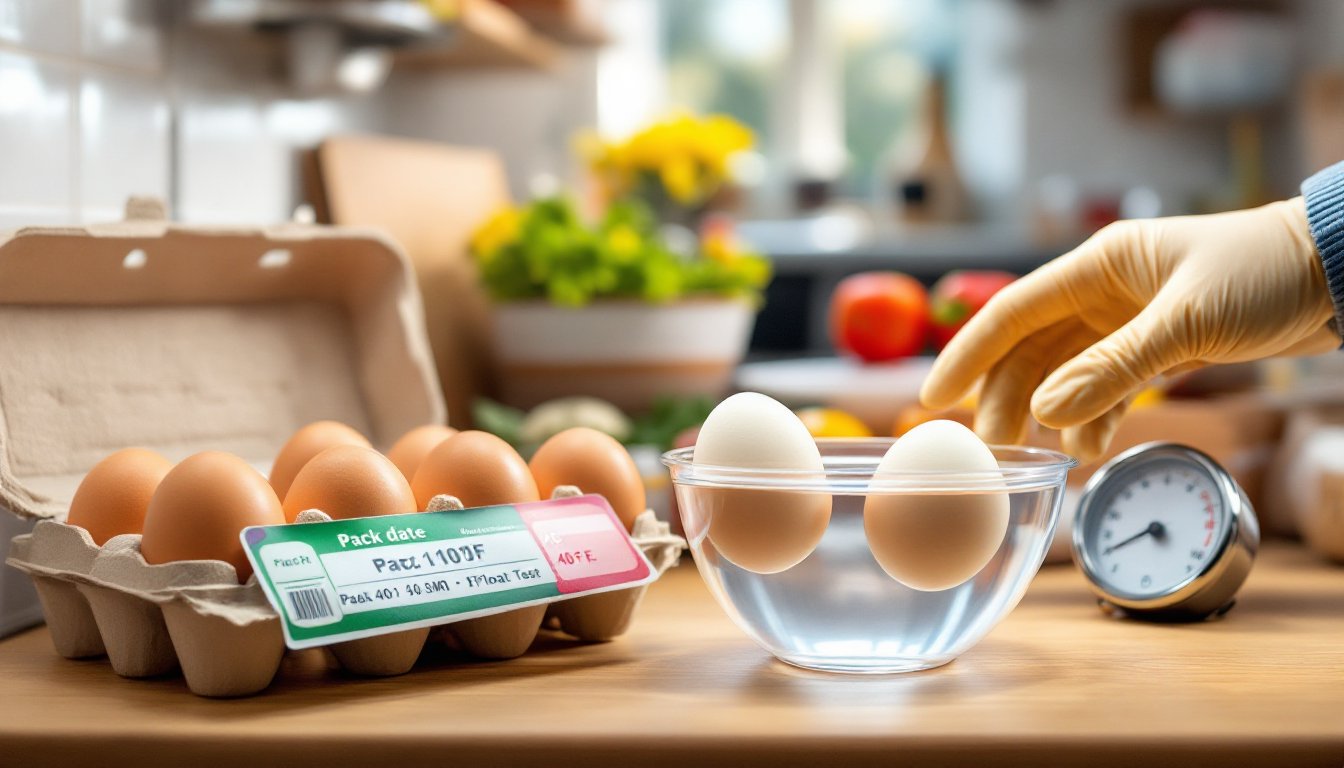
The float test is the oldest and still effective method. Fill a bowl with cool water and gently place the egg in it. A fresh egg sinks and lies flat on its side. As an egg ages, the air cell inside grows larger, making the egg float higher. An egg that floats to the surface is old, it may still be edible, but it’s at the end of its life. An egg that stands upright in the water (pointed end down) is borderline: use it for cooking, not as a fried or poached egg where freshness is obvious.
The smell test works once the egg is cracked open. A bad egg has a distinct, sulfurous odor. Fresh eggs have little to no smell or a neutral, clean scent. If the raw white or yolk looks discolored or if the smell is off, discard it.
Visual inspection of the white is helpful too. A very watery white (instead of thick and clear) suggests age, though the egg may still be safe. Pink, iridescent, or dark streaks in the white or yolk are warning signs of bacterial contamination, discard immediately.
For hard-boiled eggs, peel one to inspect. If the surface is slimy, the smell is off, or mold is visible, it’s spoiled. Otherwise, a slightly translucent white and a darker yolk (from cooking and age) are normal.
Tips for Extending Egg Storage and Reducing Waste
Organization prevents waste more than anything else. Use the “first in, first out” method: place new cartons behind older ones so older eggs get used first. Many refrigerators have an egg shelf or designated spot, use it consistently and check it weekly.
Buy what the household uses in 3 to 5 weeks. Buying in bulk is tempting, but eggs spoil even at proper temperatures. A family of four typically uses 1 to 2 dozen eggs per week: buy accordingly.
Label hard-boiled eggs immediately with a permanent marker or sticker showing the date cooked. It’s easy to forget if an egg in the fridge has been sitting for a week or two. Cooked eggs in opaque containers are invisible: marking prevents mystery leftovers.
Store raw eggs away from raw meat and poultry to prevent cross-contamination, even though the shell provides protection. If raw eggs are handled (cracked into a bowl or used in a recipe), wash hands, utensils, and surfaces with hot soapy water before touching other foods.
For households that rarely use eggs, frozen storage is practical. Crack eggs into ice cube trays, freeze solid (takes 4 to 6 hours), then pop cubes into a labeled freezer bag. Each cube holds about 2 tablespoons, so portion control is simple. Thaw in the refrigerator and use within 24 hours for best texture.
Conclusion
Eggs last longer in the refrigerator than most homeowners assume, raw eggs can safely remain fresh for up to 5 weeks when stored properly. The keys are a stable, cool refrigerator (40°F or below), eggs kept in their original carton on an interior shelf, and awareness of the pack date. Cooked eggs last 3 to 4 days, and simple checks, the float test, smell, and appearance, confirm freshness. By organizing the fridge, labeling contents, and using older eggs first, households can confidently store eggs and reduce waste.