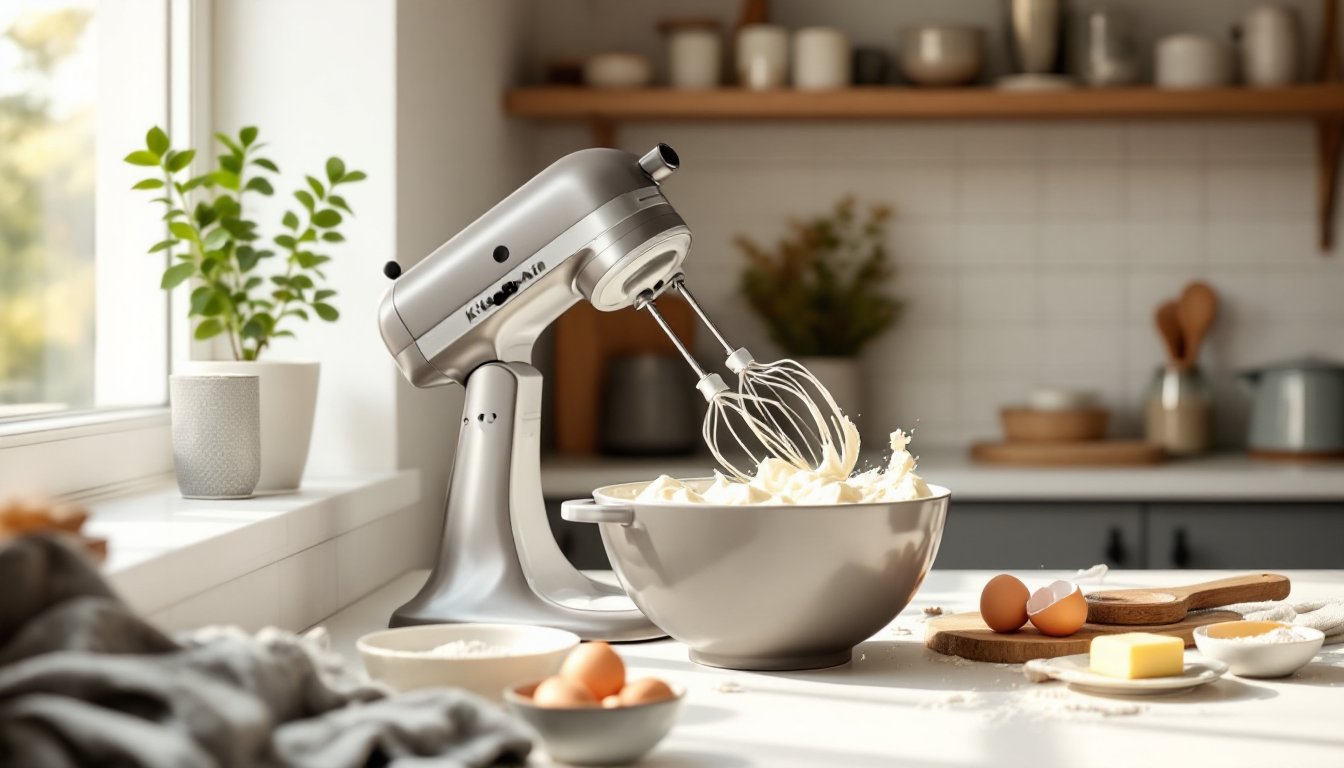
For home bakers and dough enthusiasts, the KitchenAid hand mixer 5-speed strikes a balance between affordability and performance that countertop stand mixers simply can’t match for small batches or apartment kitchens. Unlike bulky stand models, a hand mixer offers flexibility, you can move it from counter to table, store it in a cabinet, and tackle everything from cookie dough to whipped cream in minutes. The 5-speed design delivers enough power for serious mixing without overwhelming the baker who’s mixing cookies once a month. This review cuts through marketing noise to examine what makes the KitchenAid 5-speed stand out, how each speed setting actually performs, and whether it’s the right tool for your baking goals.
Table of Contents
ToggleKey Takeaways
- The KitchenAid hand mixer 5-speed offers flexible performance for home bakers mixing small to medium batches, with 120 watts of motor power that outperforms budget competitors costing $35–$60.
- Five speed settings provide granular control—speed 1 for gentle folding, speeds 2–3 for doughs, and speeds 4–5 for whipping air into cream and frosting without mid-mix adjustments.
- Hand mixers excel for whipped cream, frosting, and occasional baking tasks while saving cabinet space compared to bulky stand mixers, making them ideal for apartment kitchens and minimalist cooks.
- The ergonomic 2-pound design fits comfortably in one hand with easy-reach controls, though top-speed noise (75–80 decibels) may not suit late-night mixing in open-plan homes.
- Use the turbo-boost button when the motor strains on thick dough rather than jumping to the next speed level, which could suddenly accelerate your mix beyond control.
- A KitchenAid 5-speed hand mixer is ideal for bakers who mix cookies or cakes monthly, but frequent bread makers (3+ batches weekly) should consider a stand mixer to save wrist fatigue and time.
Why The 5-Speed Design Matters For Home Bakers
A 5-speed hand mixer isn’t just a catchier number than 3-speed, it’s a practical difference in how well you can handle varied tasks. Speed 1 handles delicate folding and slow mixing of dense batters without splattering. Speeds 2 and 3 work through medium-thickness doughs like bread or pizza dough without bogging down. Speeds 4 and 5 whip air into batters and cream, which is where most home bakers spend their time. That granular control means fewer mid-mix adjustments and less frustration with batter that’s either undermixed or over-worked. The motor in a KitchenAid 5-speed is tuned for sustained performance across that range, it won’t labor on thick dough or race away when you hit speed 5 on a light batter. This is especially useful if you bake different things: one day sourdough starter, the next day frosting. The speed ladder lets you dial in what you actually need instead of choosing between too slow and way too fast.
Key Features That Set This Mixer Apart
Motor Power And Mixing Performance
The KitchenAid hand mixer 5-speed packs roughly 120 watts of motor power, enough to handle a pound of butter or three cups of flour-based dough without stalling. Most competitive hand mixers in this price range (typically $35–$60) use 60–90 watt motors, so you’re getting measurably better performance. The beaters themselves are typically stainless steel, which resists corrosion and won’t transfer any odd tastes or colors to your mix. The turbo-boost button on many KitchenAid models gives you a temporary power surge if you hit a stubborn patch of dough, practical for last-minute power without having to jump to the highest speed.
Mixing bowl compatibility matters more than people think. The KitchenAid hand mixer works with any mixing bowl roughly 6–10 inches in diameter, so you’re not locked into buying their bowls. But, the included churn bowls are typically ceramic or tempered glass, which are quieter and less prone to annoying rattling against the beaters.
Ergonomic Design For Comfort And Control
This mixer features a grip that sits comfortably in one hand for 5–10 minutes without fatigue, key if you’re mixing by hand regularly. The weight is around 2 pounds, light enough that you won’t feel it during a cookie batch but substantial enough to feel stable and built to last. The button layout places the speed dial and turbo button within easy reach of your thumb, so you don’t have to shift your grip to adjust.
The cord is typically 5 feet, which is adequate for most kitchen counters but might require a strategically placed outlet. Eject buttons for the beaters and whisks are firm but not sticky, you won’t fumble with them when your hands are buttery. The noise level is honest: it’s louder than a stand mixer at top speed (around 75–80 decibels) because the motor is working harder relative to its size. If you live in an open-plan apartment, mixing at 11 p.m. will draw attention.
Speed Settings Explained: When To Use Each One
Speed 1 is your slow fold. Use it when you’re combining ingredients gently, folding flour into whipped egg whites, mixing a dry rub, or stirring together a simple batter. It’s also where you start any mix before ramping up, to avoid a flour cloud.
Speed 2 handles soft doughs and thick batters, think pizza dough, biscuit dough, or brownie batter. The mixer’s beaters bite through the mix without aggressive splashing. You’ll feel the motor engage but not strain.
Speed 3 is your general-purpose middle ground. Most butter-and-sugar creaming happens here. It’s fast enough to develop the mix but slow enough to keep control. If a recipe doesn’t specify a speed, start here.
Speed 4 introduces significant aeration. Whipping cream, beating egg whites, mixing cake batter to fluffy peaks, these all live on speed 4. The motor runs noticeably harder: you’ll hear the pitch climb.
Speed 5 is maximum speed for maximum air. This is where you finish whipped cream, meringue, or a light frosting. It’s aggressive, which is why you never start on speed 5 with dry ingredients. Run the mixer for 30 seconds at top speed and you’ll have soft peaks: another 30 and you’ve got stiff peaks. Going longer risks breaking down the structure (over-whipped cream turns grainy).
The turbo boost button temporarily overclocks the motor by about 20% for 5–10 seconds. Use it when you feel the motor straining on thick dough rather than jumping to the next full speed, which might suddenly go too fast.
Real-World Applications In Your Kitchen
Home bakers often ask: do I really need a stand mixer, or will a hand mixer work? The honest answer depends on frequency and volume. If you make cookies once a month and bread twice a month, a hand mixer handles it comfortably. You’ll spend maybe 3 minutes actively mixing any given batch. If you bake bread three times a week in large batches (5+ pounds of dough), a stand mixer saves your wrist and time, but you’re probably not the audience for a hand mixer anyway.
For small cakes, brownies, and quick breads, a KitchenAid 5-speed hand mixer is ideal. A layer cake batter mixed by hand takes maybe 4 minutes: a stand mixer would do it in 2, but you’ve now got a bulky appliance to store. Cookie dough comes together faster and more uniformly with a hand mixer than with a wooden spoon, and the speed dial lets you pulse in dry ingredients without overdeveloping gluten.
Whipped cream and frosting are where hand mixers truly shine. Speed 4 or 5 whips heavy cream in under 2 minutes and beats butter-and-sugar to pale, fluffy clouds in 5–7 minutes. Many bakers find hand mixing more intuitive for frosting, you can feel when the texture’s right and stop instantly, whereas a stand mixer keeps going until you physically stop it.
Recent appliance testing from recognized review sources shows KitchenAid’s 5-speed model consistently outperforming budget hand mixers on dough mixing endurance and noise levels. Kitchen design specialists often recommend hand mixers for small kitchen organization, where cabinet space is precious. For apartment dwellers and minimalist cooks, a hand mixer occupies maybe 6 inches of cabinet depth versus the 18+ inches a stand mixer demands.
Conclusion
The KitchenAid hand mixer 5-speed delivers genuine versatility for home bakers who want reliable performance without a stand mixer’s footprint or price tag. The motor power is measurably better than cheaper alternatives, and five speeds give you control across real tasks instead of forcing compromises. For regular bakers mixing small to medium batches, it’s a solid investment that won’t gather dust. If you’re mixing dough by hand twice a week in large quantities, you’ll eventually want a stand mixer, but if your mixing is occasional or space is tight, this mixer earns its place on your counter.